Molly Malson, Senior Manager of UX Research at Charles Schwab, shares how her team of nearly 50 researchers built connection and cohesion while working fully remote. She walks through five concrete techniques, from a monthly research salon to one-on-one coffee chats, that the team developed organically and refined over time. The talk draws on her own experience managing a fast-growing distributed team and emphasizes that meaningful connection requires deliberate planning, not chance.
Key Takeaways
- Organic connection does not scale: as teams grow rapidly and stay remote, deliberate programming is required to prevent new members from being left outside established social circles.
- The research salon, a monthly hour-long structured discussion on any research-related topic, has run since mid-2019 and remains well-attended, suggesting low-overhead recurring formats can sustain engagement long-term.
- One-on-one coffee chats, managed through a simple survey and Excel pairing tracker, generated stronger individual relationships than group events alone and saw near-universal re-enrollment after the first quarter.
- Letting popular activities run over their allotted time rather than moving to the next agenda item is a simple, high-return adjustment to virtual event planning.
- Quarterly research showcases open to product and development partners, often drawing several hundred attendees, extend the team's visibility and reinforce the value of research to a broader audience.
- Structured team meeting formats, combining icebreakers, open research reviews, and a personal high-low segment, can make routine meetings a meaningful touchpoint rather than a reporting obligation.
Questions & Answers
- Are these activities for your immediate team of eight or the larger group of 50 researchers?
- Most of the techniques (salon, extracurricular events, coffee chats, showcase) are for all 50 researchers. The structured team meeting format is specific to Molly's direct team of eight.
- On the quarterly research showcases, are presenters only from the research team, or do line-of-business guests participate?
- Initially it was researchers only. The format evolved to include product partners and others who speak to how they used the research and what they did with the findings. That addition has strengthened the presentations.
- How do you account for different preferences, such as introverts vs. extroverts, when planning activities?
- Molly said this hasn't been approached systematically but is a practical consideration. As one example, a karaoke idea was replaced with a lower-pressure name-that-tune format. In group settings, she actively calls on quieter participants, drawing on her research moderation instincts, while making clear that people can decline to share.
- Can you share an example of an activity that didn't work well and had to be changed?
- No single failed activity came to mind, but one common adjustment was pacing. Events that packed too many activities into an hour sometimes had to cut short something that was generating strong engagement. The lesson: if an activity is working, let it run rather than moving to the next item on the agenda.
Session Notes
Context: Rapid Growth Plus Remote Work
When Molly Malson joined Charles Schwab, the UX research team had three researchers. It has since grown to nearly 50 researchers, multiple managers, a director, content strategists, and roughly 150 designers across the broader UX department. That growth, layered on top of the COVID-19 shift to fully remote work, created a real problem: team members frequently did not know who else was on the team, let alone build working relationships with them.
The team asked three practical questions as a result: How do we learn together when we are apart? How do we let people grow from each other over video calls? How do we replicate the informal personal knowledge that normally builds in hallways and offices?
Technique 1: The Research Salon
The salon predates the pandemic. Molly launched it in mid-2019 as a grassroots initiative, before she held a management role, after noticing that researchers across the company were independently asking the same questions and had no shared forum to work through them together.
The format is simple: one hour, once a month, with a Confluence sign-up page where anyone can propose a topic. Molly fills gaps when the agenda is thin.
- Sample topics: managing a research roadmap, when to use median vs. mean, research ethics, debating the Kano model, innovation lab results, and researchers' own job interview experiences.
- Anyone can add to the agenda, not just managers.
- The format is modeled loosely on the 16th-century European salon, where a host facilitates open intellectual conversation rather than presenting to a passive audience.
Technique 2: Extracurricular Events (The Party Planning Committee)
A self-selected group of four researchers took on the role of coordinating social events for the broader team. Their mandate: celebrate milestones, mark accomplishments, and create low-stakes reasons to spend time together.
- Activities included a virtual pinata, online board games, home scavenger hunts, and a virtual walk-a-thon with prizes.
- Holiday events included themed food and drink pairings, with one session featuring a live cooking demonstration of crepes.
- The team also organized virtual baby showers, new-hire welcome events, and birthday and work anniversary announcements on Teams, where colleagues share an animated GIF representing their wishes.
One practical lesson: if an activity is generating strong engagement, stop the agenda and keep running it rather than moving on to the next item.
Technique 3: Coffee Chats
Group events helped, but Molly noticed that new team members often remained outside the tighter social circles of longer-tenured researchers. One-on-one conversation was the missing piece.
- Survey participants to confirm interest and flag people they already know well, so pairings are genuinely new connections.
- Manually pair researchers monthly using Excel, tracking prior pairings to avoid repeats.
- Provide a list of optional conversation-starter questions for pairs who want a prompt.
- Let pairs decide frequency and duration: once or twice a month, 30 to 60 minutes.
Launched at the start of 2022, the program saw near-universal re-enrollment after the first quarter, and several participants asked to join who had initially opted out. Molson notes the tracking overhead is modest.
Technique 4: Educational Opportunities
The team identified a gap in structured learning and applied standard research practice to scope the problem before designing solutions.
- An exploratory survey mapped what researchers had done recently to educate themselves and why.
- A follow-up survey was in field at the time of the talk to identify preferred topics, formats, and ideal learning experiences.
- A cross-functional working group, mixing individual contributors and managers, is leading the initiative rather than leaving it to managers alone.
Ideas under consideration include mentoring pairings, short videos on key topics, method-specific case studies, workshops, and tiered reading or training curricula. A key open question is whether to build new resources or curate existing ones.
Technique 5: Structured Team Meetings and the Quarterly Research Showcase
Molly redesigned her direct team's meeting format based on a survey of what team members actually wanted from those sessions. The format now follows a consistent arc:
- Icebreaker: Two optional questions to choose from (examples: childhood actor crush, worst job interview, does your car have a name).
- Manager announcements: Kept brief.
- Research review: Open sign-up for anyone to share work in progress, a report for feedback, or a problem to solve collaboratively.
- High and low: Each person shares one high and one low since the last meeting, personal or professional.
Separately, the broader research team runs a quarterly research showcase open to product and development partners. These sessions often draw several hundred attendees, are organized around a unifying theme, and have evolved to include product partners speaking to how they applied research findings.
Closing Thought
From day one the research team does a phenomenal job making sure each team member regardless of location feels connected to and supported by the broader team. I believe it's because the team doesn't rely on chance or serendipity for connection and collaboration to happen. With consistent intention the team removes blockers and creates opportunities for folks to work closely together all while appreciating one another as individuals remotely or not.
Transcript
Read the full transcript
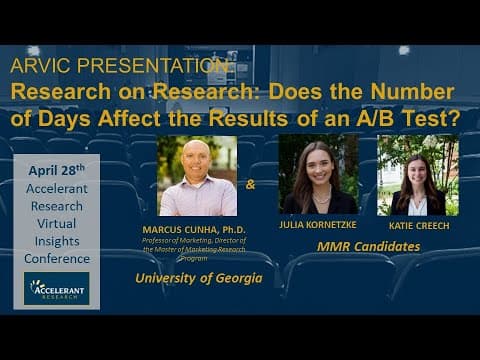
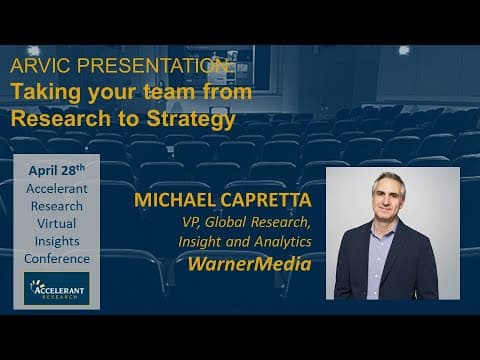
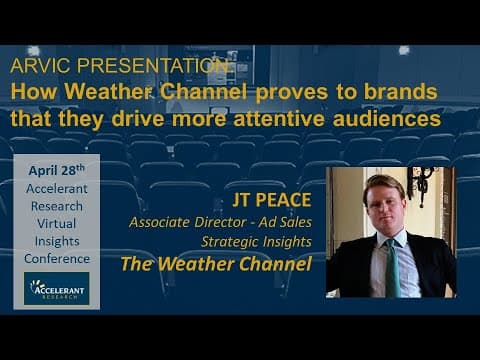
all right looks like we have most everyone uh gathered and owned so we'll go ahead and get started um welcome everybody my name is bill mcdowell i'm ceo at accelerant research we are proud to be the host of uh the virtual insights conference that you are all currently attending um quick background on uh who we are how these things came to be and then i'll do a quick intro and kind of you know run down of what you can expect for the day but i'm going to do very little talking and let our presenters do most of the talking because that's what everyone is here to see um but real quick uh virtual insights conferences so back in 2020 when lockdowns were setting in the team here at accelerant research was i guess just noticing that conferences were being canceled everybody was getting shut down and you know pushed off to their disparate at-home locations and what we started doing was just sort of culling together you know within our own networks um these we call them at the time quarantine virtual insights conferences because nobody was in the office at the time uh many folks are in that same situation still but you know we started just pulling these together as opportunity for research and insights pros to get together talk a little shop um share some expertise and experiences and best practices and you know what we planned to be just you know one or two of these events back in 2020 has just kind of kept rolling and going and we've gotten really good reception good attendance um so we just kind of kept running with it um accelerate research we are the hosts of this we are a research agency we're not a you know an event planning uh organization we don't do you know polished conferences um for a living so you know what you'll get is something that's a little more on the raw hopefully fun side uh low expectations you know just again a chance for a bunch of research geeks to get geeks to get together and geek out um so again i'm gonna give you you know quick intro and and what to expect for today and then hand off to our first presenter um so you know a few ground rules that we've been operating by with these conferences um you know it's a reminder we're at the mercy of tech you know a lot of our presenters a lot of our um you know emcees and moderators are still remote and at the mercy of whatever you know bandwidth issues might come along storms might come through and knock out power um you never know so you know we're forgiving and you know we're gonna basically record everything archive everything if you know tech goes out and there's an issue then you know it is what it is and we'll all you know catch it on the replay as it were um the next point it doesn't often bear repeating but we say it anyway uh be respectful yeah the fact that we're remote that we're not at a live in person conference doesn't give us license to you know to troll and and comment and be ugly to one another um what we do encourage though is networking engaging interacting you know the fact that we are remote it's you can't raise your hand and see the audience and see folks nodding their heads as you're as you're talking and presenting so you know to the extent that you can get on the chat get into the q a engage with not only the speakers but also one another in the audience you know we try to try to simulate you know the real in person conference environment to the extent possible and part of that is you know just interacting with one another and not just sitting back and listening um so do ask questions you know we're we're talking to like i said research and insights folks who are well versed in defending results and you know talking through um you know what they've what they share on a daily basis so questions even you know challenging questions are are great you know this is the stuff we kind of live for so um and if you're out on social i know we're broadcasting this uh we've got many folks that are directly joining the zoom webinar we've also got some folks over on youtube uh coming in through a few different channels what we're gonna do is try to keep track of chatter in all locations so if you submit questions we'll keep an eye and we'll bring those to our speaker's attention if you're out on social and you're you're talking about this please use hashtag arbic twitter and linkedin talk one another engage with one another and let's get rolling a quick rundown of our our slate of presenters starting at noon which is the next presentation we'll have jamal davis uh talking about inclusive design is accessible to everyone followed by uh marcus kunya of university of georgia's mmr program as well as a couple of mmr candidates sharing some uh a b test research on research results um from from some research that they conducted um we've got at 1 30 p.m michael capreda from warner media talking about taking your team from research to strategy uh batting cleanup today will be jt peace from the weather channel and he'll be talking about how weather channel proves to brands that they drive more attentive audiences um we got a good mix today of different subject matters different verticals um industries that folks are coming from uh we've got a mix also of some hour long presentations as well some quicker half-hour presentations so hopefully a good mix a lot of engagement we are excited i'm excited and i'm also excited to stop talking and get on to the next or to our first presenter who is molly malson she is senior manager of user experience research at charles schwab and she is going to be giving us a rundown of keeping a fully remote team connected something that i think many of us can relate to and are excited to to hear what she has to say about so that's it i'm going to pass off to molly and i'll come around at the end and maybe lead some q a but otherwise i'm going to go dark molly it's all yours thank you bill and i had to do some jockeying around everybody speaking of the the tech issues because my my company keeps removing zoom from our her computers and i tried to add it and i couldn't i just realized that the version of the powerpoint i'm showing is not the same one so we're gonna do we're gonna do a little put dancing and see if i can not talk through some of the slides that i'm not showing anyway this is a good opportunity to try to think on my feet and make sure that uh that i um kind of can connect here on the right thing so let me share and you can see that everybody i assume i'm going to assume you can so thanks for having me again today and just wanted to talk to you like like we said about about uh if you want to do something more in terms of team engagement and this is about research but it's it really can apply to any type of team that's working remotely so it doesn't specifically have to do with user experience research it just is the the format in which we we did this kind of work so before we do that i just wanted to just tell you a little bit about myself so i went to graduate school intending to work in politics but thankfully i dodged a bullet there and didn't really like that field so i went into technical writing and i was that doing that for about 12 years and then i got really kind of tired of writing instructions for bad interfaces and so i moved into the user experience field and i've been there for actually the past 18 years that was one of my updates and about four years ago i decided to focus totally on the research side because that's really what i was the most passionate about and then in the last year i finally decided to give a go at managing i wasn't sure if i ever wanted to do that and at my age i decided this was the time to try it so for about the last year i've been managing a research team that is composed of eight people and that really is kind of where this all started and i've worked in a lot of different industries but mainly i'm focused on digital experiences when we're talking about user experience sorry i'm also operating two powerpoints at the same time so i can get the right notes and sorry about this but this is my old presentation and i'm just gonna tell you that what we'll be talking about today is a little bit of background on our team and then i want to talk about a research salon that we have been doing at our company for a while i want to talk about some extracurricular events that we do and then i want to talk about coffee chats and then i want to talk about educational opportunities that we've created for our team and then lastly some other connection points that we have to create that kind of atmosphere that we're talking about but first i wanted to take a poll and i wanted to ask people whether and the question really is since the covet shutdowns began as your company made efforts to promote has your company made efforts to promote team engagement when working remotely and so i want to know if they have or they haven't or maybe you don't work remotely and this doesn't apply to you so bill if you'd like to show the slide the poll and have people vote let me know when you're seeing some answers in or maybe give it a little bit more time if you didn't hear that we're doing a little pull you get some results in there bill uh yeah it looks like they're rolling in now okay i just saw the poll show up a little bit ago so maybe there was some delay yeah that could have been your moderator's fault um you apologized all right looks like we're slowing down so i'm going to go ahead and announce results how's that sound okay sounds good do my best richard dawson here go with the survey said yes at 85 and no at 15 that's really good i'm glad that that's happened i i assume that most people who have this remote engagement have made some sort of effort to to promote that i know that it was hard for all of us to figure out and so i am glad to hear that uh that a lot of people have done that and while this was happening i did send myself the new presentation and i would really like to do that because this is going to be really not fun to be trying to present an old slide show so if you would just bear with me i'm going to try to grab that new one and pull that up and it's just taking a minute to get through if you all have been in powerpoint hell most of your career or recently that's where i'm at so i had an updated version and somehow it didn't save properly so i'm sending it to myself but it hasn't arrived yet i'm just trying to [Music] keep talking while this comes in and it's like a watch pot it doesn't boil if you're watching it and i'm watching it so it you know while we're doing this does anyone want to share you know something um something that their their companies have done for remote engagements that you found that was really valuable or that wasn't valuable just anything you want to share about that and just start talking or bill i don't know if you have to unmute someone or if they have to raise hands looks like we've got a couple coming into the chat okay start there so i've got uh virtual happy hour not my company but my wife's got kara with monday morning coffee talks to start the week um non-work related uh let's see oh yeah we got a bunch of i didn't miss any that's wonderful i've got my presentation up too so i'm going to share again and and yeah what else is there what else did anybody share while you're pulling that up stop the coffee talks oops i'd like to remind everyone about the ground rules that i shared earlier that we are at the mercy of tech right come on this is a perfect example let's see i can see them we schedule once a month and if the team are in the same town they can meet in person and drop in and out of the virtual lunch with an icebreaker and no work topics i like that small group non-work interest groups coffee chat crime podcast interests movies books oh that's nice weekly stand-ups for all employees virtual walks i've done that monthly in-person virtual lunches water cooler talks cool these are all really interesting so you might hear some things that are similar to that are different but thankfully i now have the correct presentation so this is going to make everything much easier so i want to start with talking about how we got to the point where we started focusing on team engagement more closely and it's actually before covid so when i started at the company i'm at now i was the third researcher hired at a company of over 15 000 employees and we had one research managers and just a handful of designers and since then our team has grown rapidly so the three of us expanded to now we have almost 50 researchers we have multiple research managers we have a director we have content strategists and we have about 150 designers so the team has gotten huge in the time that i've that i've been there and then sprinkle in covid so while this expansion was a really great testimony to the power of user experience and our company support of it adding this to the coveted shutdowns and everyone working remotely for the past two years led to serious challenges with the cohesion of our teams and really even knowing who was on the team so this led to a lot of questions for us like how can we effectively learn together when we're apart how can we learn and grow from each other over video calls what can we incorporate how can we incorporate knowing more about each other personally which usually happens you know outside of meetings and office buildings so how can we still make that happen so to create opportunities for our team to bond we put together various techniques to encourage team building and collaboration and we've really had a lot of success with some of these techniques and since we do plan to have a lot of people continuing to work remotely we'll probably keep them in place for some time and like i said while some of these are maybe all of them are familiar to you maybe you'll hear a new idea or two that you can bring back to your team and also this i think is just good in general for distributed teams who do have to work remotely because they're not in the same location whether or not they are in an office so the first thing we put into place is what we call the research salon and actually this happened before the kovic shutdown and so how that would be how that began as as we quickly grew in those early years we'd have researchers from all different parts of the country joining our team and we'd get introduced and we'd have a you know basic understanding of what they were working on but outside of team meetings where we might connect with them we never really crossed paths again after that first introduction so to try and connect i started messaging people to learn more about what their background was and how are they handling different projects and so on and as i met more of the team i noticed that we were all kind of asking the same questions and we all had different thoughts that we'd want to share that we were sharing and i thought you know we really should be talking about these things together and we should be sharing some of these some of the knowledge that we're getting from these conversations with each other and so ever since i learned about the italian invention of a salon i really wanted to do it and i think i read about it in college if you aren't aware a salon was a 16th century idea that was also popularized in france in the 17th and 18th century and the setup was usually predominantly intelligent women would host gatherings at their home and they would have stimulating conversations about topics of the day and typically the woman who hosted was called the solanier and they were really expected to run and moderate the conversation so when i was thinking about how i wanted to talk talk to researchers about all kinds of random requests and and topics i thought a salon would be a really great forum for doing something like this so i suggested that to the manager at the time could we start doing this and i just went ahead and started hosting those um on a monthly basis and i wasn't a manager at the time so it was just kind of a grassroots thing that i got started and so we started doing these they're an hour long and we have them every month and they've been going since mid 2019 and people are still interested and engaged in them so i think we'll keep doing them for some time and so the way we really structure and set them up is that we have a confluence sign up page and people can come and you know if they have an idea they can put it on the agenda for the next month occasionally i do need to ask people for topics if we don't have enough and often i'll just come up with an idea for a conversation that we could have and i put that on the agenda as well it usually doesn't take too much time to put something together and in terms of what we talk about it's really anything and everything related to research our jobs and just to give you some examples of some things we've talked about once we talked about how you manage your research roadmap and we had different people sharing different ways that they do that we had a topic when do you use the median when do you use mean when reporting data we talked about research ethics and best practices in terms of that sometimes someone goes to a seminar or an educational event and so they come back and give us a summary of what they learned one time we had a debate where we had one person who was in favor of using the cane is it kano or kano model i'm not sure uh pros and cons of using that for prioritizing prioritizing items on the roadmap we also have an innovation lab at our company and so oftentimes they they do six or eight week types of research and they have high level summaries so occasionally someone from that group will share one of their lab results and then one that we had really popular recently was just asking about how people have been interviewed for jobs for researchers and do they you know what things do they like or dislike what are good and bad experiences and that also helped us as managers to sort of figure out and tweak the research or sorry the interviewing process that we do ourselves so um talking about extracurricular events you might all remember when we thought we'd be in our homes for like a few weeks and we'd go back and and then it was a few months and then we kind of realized um hey we don't know when we're going back and we'd like to do some social activities so at that point a few extroverts on our team decided to start planning some of these extracurricular events for our for our group and we affectionately call these researchers the party planning committee if anybody has watched office they know that this is the party planning committee at the office always coming up with different activities for the team to do and so it was a team of four people and they took it on themselves to create a plan of engagement just to celebrate fellow researchers milestones and accomplishments and to coordinate fun and engaging activities to just help us connect with each other and so they really put on a lot of fun events and i still marvel at how they did some of these and i'll just share a couple of examples so there was one event where they came up with a virtual pinata i think this was some outside tool and we got to play with the pinata we've done online board games of various types we've had scavenger hunts in our home so we're looking for different things and we'd bring them and show them or take a picture of them and we'd have a contest with different teams to find the most things and we had a virtual walk-a-thon at one point where different people would walk on their own share their milestones and compete against each other with prizes and on top of that you know they've added some really special touches like we have had holiday themed gatherings so there was a time where everybody got some caramels or turkish delight and coffee or tea and they got to choose which one they had and then we all got together and had a holiday party they started creating an intro meeting for new employees so as you heard how much we've grown we have a lot of people coming on new and so in addition to everything else they just wanted to have a hey welcome like kind of a virtual get to know you event for those people they have done baby showers we've had people who've had babies so they've done virtual baby showers and of course the birthday anniversaries announced birthdays and work anniversaries they announce on teams and then everybody shares a animated gift that represents their wishes for that person for that day so they pretty much coordinate all this for us which is really wonderful and then there's one really really fun event that i mean i love food and i love cooking and i love eating so this was uh various conversations about food and drink and they started with a talk about different kinds of coffee and what the coffees are made of different kinds of coffee drinks and what you might pair with those in terms of desserts and then we had a wine pairing segment and then right here you can see this was actually one of our researchers who showed us how to make crepes and so people could sit in their in their kitchen and follow along and make crepes as well and so that was really really fun and crepes i think looks sort of like they're hard to make but they're actually really easy so that was a very fun event that we did and then the next thing i wanted to talk about is coffee chats and so you know although these group gatherings that we had they did give us a venue for that face-to-face time with other researchers i still you know noticed that individual conversations and relationships really only happened organically or if you know a couple researchers happened to be on the same project they'd happen to know each other but they other than that there wasn't a chance for that kind of one-on-one conversation so and also as the team grew we found that a lot of the stuff we were doing there was a core group of researchers who'd been there for a while they knew each other really well and so they were you know really comfortable with the relationships they had but new researchers would be a bit outside of that tighter knit circle and i think we all know or remember when you were in school or somewhere where you were not in the in group and people had relationships and you didn't and so i was really concerned about people who just weren't in that group or didn't feel like they had people to talk to because they were so new and i also realized that myself there were so many people on the team that i'd never talked to one-on-one and i know that's just such a great way to get to know someone it's we all kind of know that those zoom meetings online they can be great and but it's a little awkward when you're talking sometimes and if you have 15 people you might not ever get a word in edgewise or it can just be awkward so one-on-one conversation is just easier it flows easier one person talks the next one talks and so that one-on-one conversation was what i was really looking to create so i decided that we should start having these coffee chats and what we did is we started with a survey so because we're researchers we like to research ourselves and do research before we do things so we just had a survey to see who wanted to do this first of all it wasn't obligatory obviously and also give people a chance to say you know i know these people really really well so don't pair me with them i'd like to meet someone new and then from there i paired researchers together for once a month and then i would give that list to the the groups and told tell them to meet one or two times in the month whatever they wanted to do for a half an hour hour whatever worked for their schedule and then also we gave them a list of kind of conversational questions that they could use to get to know each other if they're not quite as quite as talkative as other people and this did honestly take just a little bit of time i realized i had to do kind of some formal trekking in excel to make sure i didn't pair the same people twice and i have to look it over multiple times to make sure i didn't put someone down twice but it really isn't that much work so we started this actually the beginning of this year and we started with one quarter of pairings and then after that i asked do people still want to do this and almost everybody i think everybody who did it the first time wanted to keep doing it and then we actually had people who didn't before that wanted to do it again and so i'm not really sure you know how long we'll do this but i'm assuming we'll hit some kind of saturation point where most people have talked to other people or maybe then we'll start over again so we'll just use our research and survey methods to find out if that's what we want to do and we have got some really good feedback on the coffee chats too one person told me that it's something she looks forward to every month and other people write me afterwards to say oh i had such a great conversation we went over and so it's really been something that people are really excited about so another need we've identified and finally we have the bandwidth to focus on is providing more educational opportunities for our fellow researchers and we have such a great variety of backgrounds and experiences on our team that we really have a lot of internal expertise to share and in addition to all the stuff written out there in books and in articles and blogs about our industry we have a lot to to look at and so when we started that we're in the early stages of planning this we started it this year but again we're starting out with researching the problem just to make sure that we really know what the problem is before we come up with solutions so we've done an exploratory survey survey with our researchers just to see what things people have or haven't done recently to educate themselves and just find out what are their reasons and their goals and motivations for doing that kind of thing and then we're putting out a survey this week actually where we'll ask more specifically about what topics people want to learn most about what kinds of formats they really like the most what's their ideal kind of experience in getting the education they need and then from there we'll start coming up with some ideas and getting feedback what we really don't want to do is one big question we have is do we make new things or is it just a matter of curating what's out there so sometimes you know people don't know where something is but it is out there so maybe it's just a matter of pulling together the resources that they need or maybe we need to send people to more formal training programs so we just want to make sure that we know the needs well enough so that we don't make something that people say they're going to use but they actually don't use it and then when we started this we just had some initial ideas of what we might come up with and so some of the ideas we had and we're going to explore are do we want to set up mentoring relationships so because we have newer and newer and more experienced people on the team should we pair them up to just help them grow in that way do we want to create short videos on key topics that they could just explore quickly do we want to create maybe case studies for different research methods or different experiences that people have had do we want to do workshops maybe for training purposes where people work together or maybe there's a curriculum that we create for different levels of expertise and we recommend you know reading these books doing these things depending on where you are in your career and so in terms of who's working on this team what we really like to do at our company is we we don't just have manager solving problems so we have a cross-functional group of people who are both team players or people who are working as individual contributors and managers so we're looking for people who really have a passion for this obviously and want to take some extra time to focus on this and then really that in and of itself does promote cohesion and team team work because we have people working together to solve problems outside of what they're really required to do for their job so that's really fun and then i just want to talk about some other connection points that that we have at the company you know all of this is on top of just our standard team meetings that we're involved in such as our regular research managers meetings our research team meetings our meetings with the entire user experience department and in those cases there's often an opportunity for people to share what they're doing so that we can understand and collaborate and share knowledge that we're coming up with but on top of that there's a couple of other things that we do at our company one is the quarterly research showcase so for the past few years the research team has organized this quarterly showcase we invite all our product and development part partners and that just helps us to circulate our research findings to a wider audience and these meetings are really really well attended there are several hundred people quite often and we typically focus on some kind of theme that will bring findings of a similar nature together so that or something that works across projects and products so that people can overall enhance their understanding of our users and what we're learning about them also researchers can propose topics for these these showcases and then another thing that i've done in my team meetings is i really wanted to incorporate some of the the things that i was interested in our team meetings so which you probably know is now a theme i i did a survey to see what kinds of things people wanted to do at our team meetings because different people do different things at their meeting sometimes it's just the manager sharing a bunch of updates sometimes it's sharing a story and a lot of different things so we landed on a format that i think really cements some of the things that are important to me and that is understanding my co-workers on a personal level and having the opportunity for someone to be known so to be known um more than just their work self like they can just be known as a person and not just you know somebody doing a job i really like to have fun and laugh so that's part of it and then just sharpening each other with input and feedback so the way we do it is we start out every meeting with a choice of two one of two icebreaker questions i always think those are just a fun way to get to know some random fact about someone that you might not normally know so they have two questions in case one doesn't appeal to them so some some of the extra fun ones we've talked about are what was your childhood actor or actress crush what's the worst job interview you've ever had does your current car have a name and if so what and why and i find that we're just always laughing and smiling during this time when we're going around answering these questions and then of course we have the little bit of announcements from the manager perspective and then we have a research review time where anybody can sign up to share anything that they're working on whether it's a problem to solve or they've got a report and they want feedback on or any anything really related to the job that they want to discuss so that's the opportunity to practice sharing information and getting feedback and learning what other people are doing and collaborating and helping each other and i found those to be really valuable too and then at the end we do something which i think some some families do at the dinner table and it's what are the high what's your high and your low since the last meeting and people will talk about work things or even personal things and that also is just a really fun way to it's it's more interesting than just a report of what you're doing it's kind of highlighting what was great and what wasn't great so in conclusion um most of us you know we want more than just a job but we also want to work at a place where we feel like we matter where relationships are important and they matter and that teams grow and learn from each other instead of just competing with each other and so i'm really excited and really proud to be part of the community that we are at and that people are so engaged and we've created all these different ways to connect with each other and i know it doesn't just happen it takes a lot of planning and intentionality and dedication so i just wanted to share some of those things with you and also to wrap up i just wanted to share a couple of quotes from people who have recently joined the team in how they feel about what it's like to work here so one person said i've been continually impressed by everyone's willingness to share their expertise and think through problems together there's a culture of collaboration that makes it easy to reach out to another researcher to learn more about who they are and their work because people are genuinely interested in how they can help and i really do see that people want to help each other and they want to share what they know and help people solve problems and then lastly this person said from day one the research team does a phenomenal job making sure each team member regardless of location feels connected to and supported by the broader team i believe it's because the team doesn't rely on chance or serendipity for connection and collaboration to happen with consistent intention the team removes blockers and creates opportunities for folks to work closely together all while appreciating one another as individuals remotely or not and so that is the end of my presentation thank you for hanging in there with me while i juggled different power points now if anyone has any questions or comments i'd love to hear them all right looks like we did have one question coming from cara while you're presenting and you may have touched on this song but are these activities for your team of eight or a larger group within your organization oh great question so most of this was for the team of the 50 all the 50 researchers my individual team meeting is for the eight but everything else is for everyone else and other questions please submit them now i just had one um on the quarterly research showcases that you mentioned um the audience or i guess the presenters does it tend to be research team members only or do you bring in i guess line of business guests to to talk about results and impact and all that good stuff yeah at first i think we had just researchers and then we realized it would be really good to have other people who work on these projects talked about how you know how did they take this how did this research help them so we have also had product partners and other people come on and talk about the value of the research and what they did with it so that i think has enhanced the presentations as well very cool just checking to see if any other questions are coming in uh let's see we've got a comment from ivan love this molly many of the ideas and activities are ones that are sparking ideas for me and my teams thanks awesome that's great to hear uh we've got megan with a question how do you take into account different preferences eg introverts versus extroverts it seems like the mix of 101s versus group might have done this but did you consider anything else to make sure activities resonated with everyone yeah that's a good question i'm i'm trying to think um i know i've made comments so i'm part of the the engagement team activities planning and sometimes i'll make comments for example last time someone really wants to do karaoke and i said you know a lot of people are nervous about doing that anyway and a lot of times they go to a bar and like drink so that they can do it and i said maybe we should do something a little less pressure pressureful so we we settled on doing a name that tune kind of thing so i don't know that we've systematically you know done that but i think that i try to think about that and when i'm in in these group things where i see people aren't talking a lot and some people are i often try to call on people hey did you have anything to say because i've got friends who are introverts and i'm kind of on the fence i can kind of go back and forth and i know that a lot of my friends who are introverts feel like they have something to say but it doesn't come out as quickly as it does for extroverts and then they never get to say anything so if i call on them then then a lot of times they'll have something to say and you know some people don't even like being in the spotlight and they'll just say no and i think that's okay but to me if you're attending an event like that at least you have some interest in being engaged so i assume it's okay to you know call on you but not make you say something so i think that's how we've done it but if you guys have any other thoughts on that i'd love to hear them yeah it sounds like that qualitative research moderator training coming coming into play find the wall flowers and keep them talking yeah exactly let's see uh let's see another one from ivan [Music] can you share examples of some activity that didn't quite work that well and had to change let me see i i'm not coming up with anything in particular there's one i was thinking about that we needed to tweak it was more about we put too many things in the event so we had all these ideas of things to do and we noticed that people were really liking a certain one but the person running it was like we got to go on to the next thing and i think we realized after hey if people are having fun at something let's just keep it going for the whole hour so that's an example i can think of where we we tweaked it a bit because we realized sometimes you you know you do something and people don't really engage and you move on if you if you hit something that people are just loving then stop everything and keep doing it so i think that'd be the advice i'd give you on that very good um let's see i think that may be the last question that we have anybody else want to submit anything before we thank molly and allow her to go about her day out too late i spoke too soon let's see we've got rick uh let's see i love how you incorporate both business highs and lows since last meeting and personal discussions icebreakers thank you so much for sharing these great ideas to make your team members feel connected yeah i find myself really looking forward to our meetings because i want to know what everybody says about something and it's just so i mean if you can talk to your manager and other people about your child your actress crush you know it just makes it breaks down barriers and makes you realize hey we all had a picture of ralph macchio on our wall or whatever in high school that was mine and uh it just helps you to relate to each other more and just not think about you know what's your role or anything else i just i always like to not care about who's in charge or who's this or that i just want to get to know people whatever it is they do and so i think that really does break the ice which is why they call it icebreakers and connect you a little bit more deeply yeah lisa turtle from saved by the bell over here [Laughter] love it all right um yeah that looks like all of the questions that we had uh molly you guys off to a really good start thank you so much uh looks like we got about yeah 10 minutes before the next presentation so give everybody a chance to catch their breath maybe grab a cup of coffee and we will resume at the top of the hour molly thank you so much thank you bye